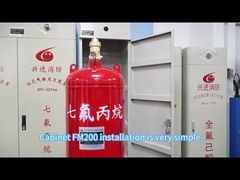
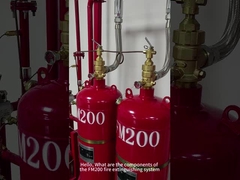
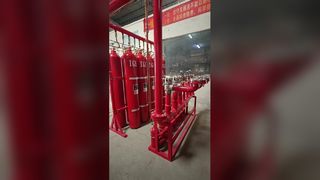
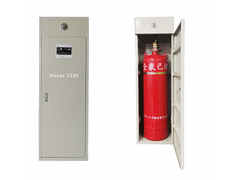
Brief: In this video, we provide an informative overview of the Pressurized CO2 Fire System, designed for multi-zone protection in libraries and electrical substations. You will see how this high-pressure carbon dioxide system works, its key components, and its various startup methods. Gain concise insights into the features that matter most for real-world use in safeguarding critical assets from electrical and other fire hazards.
Related Product Features:
The system utilizes high-pressure carbon dioxide, a non-conductive and chemically neutral gas, for safe and effective fire suppression.
It offers four startup methods: automatic, manual, mechanical, and emergency mechanical, ensuring reliable activation.
Designed for multi-zone protection, it can be configured as a unit independent or combined distribution fire extinguishing system.
Automatic startup is triggered by dual detectors with an adjustable delay, providing precise response to fire hazards.
The system is certified to meet GB16669 standards and holds voluntary certification for quality assurance.
It is suitable for protecting electrical equipment, liquid fires, solid surface fires, and gas fire hazard areas.
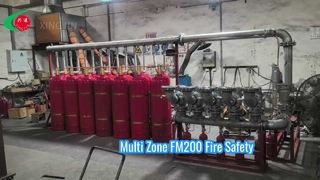
Key components include cylinder groups, container valves, selection valves, and gas fire extinguishing controllers.
The system operates on a full immersion fire extinguishing method with a design pressure of 5.7MPa.
FAQs:
What types of fires is the Pressurized CO2 Fire System designed to extinguish?
The system is effective for electrical fires, liquid fires (e.g., petroleum products), liquefiable solid fires (e.g., plastics), solid surface and deep-level fires (e.g., in libraries), and gas fires (e.g., natural gas).
How does the automatic startup feature work in this CO2 fire system?
Automatic startup is triggered when two different types of detectors (like smoke and temperature) in the protected area send simultaneous fire signals. After an adjustable delay (0-30 seconds), the system activates the startup cylinder to open selection valves and release CO2 for fire suppression.
What are the available startup methods if the automatic system fails?
If automatic startup fails, the system offers manual startup via an emergency button, mechanical startup in the cylinder room, and emergency mechanical startup by manually opening valves, ensuring multiple layers of reliability.
Is the CO2 used in this system safe for protected environments like libraries?
Yes, carbon dioxide is non-conductive, chemically neutral, and non-corrosive, making it safe for use in sensitive areas such as libraries, archives, and electrical rooms without damaging assets.