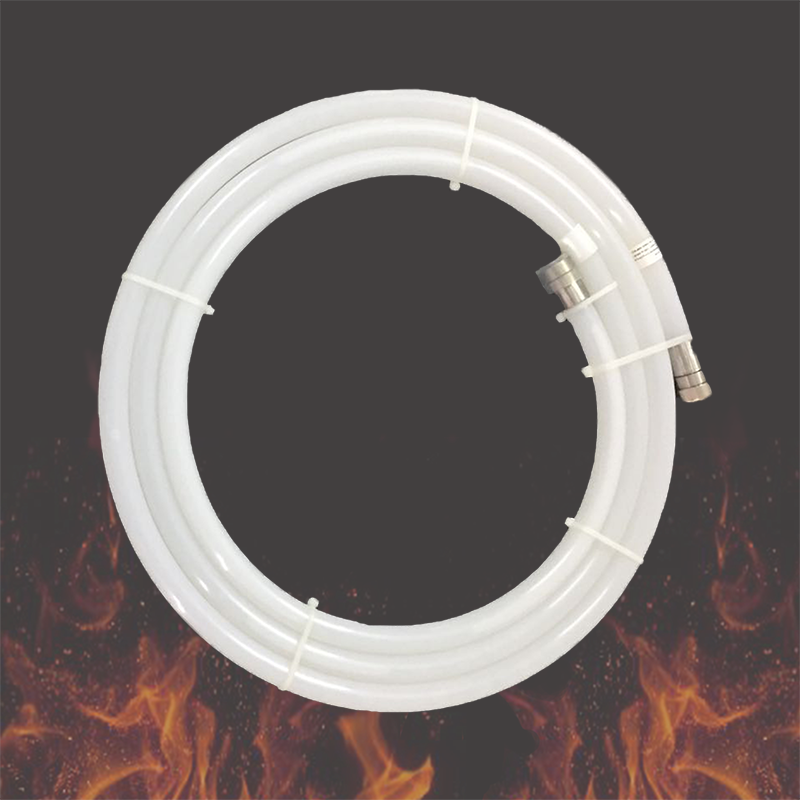
Highlight:
Automatic FM200 fire suppression tube
, Electrical cabinet fire protection system
, Direct release fire suppression tube
1. Product Overview
1.1 Technical Specifications
Important Notes on Coverage Calculation:
-
When calculating the protected space volume, include all equipment inside (e.g., engine block, batteries, or racks). Do not subtract equipment volume.
-
This system is designed for enclosed spaces. Partial openings, high airflow, or active ventilation may significantly reduce extinguishing effectiveness.
-
Fire behavior involves many variables that are difficult to predict. Therefore, successful extinguishment cannot be guaranteed under all conditions.
-
Effective fire suppression depends on multiple factors beyond agent quantity, including:
-
For optimal system selection (agent type, fill quantity, and installation method), consult with our technical team.
Unsuitable Applications:
This system is not suitable for:
-
Chemicals that oxidize rapidly without air (e.g., cellulose nitrate, gunpowder)
-
Reactive metals (e.g., lithium, sodium, potassium, magnesium, titanium, zirconium, uranium, plutonium)
Usage Restrictions:
1.2 System Operation
The automatic fire suppression tube is specifically designed to protect small enclosures with high fire risk. It operates without any external power supply and activates purely by heat detection.
When the temperature inside the protected enclosure rises to the critical threshold, the detection tube melts at the point where heat is most intense. This creates an opening that releases the entire extinguishing agent directly onto the fire source—delivering rapid, targeted suppression.
1.3 System Applications
Based on protected volume, this system is suitable for (and can exceed) the following applications:
-
Marine: Boat engine compartments
-
On-road vehicles: Cars, SUVs, vans, RVs, minibuses
-
Off-road vehicles: ATVs, tractors, forklifts, construction equipment, golf carts, grass mowers
-
Electrical infrastructure: Switchboards, fuse boxes, server racks, electrical cabinets
2. System Structure
2.1 Pressure Tube
The pressure tube serves dual functions—both as a storage vessel and as the detection element. The extinguishing agent is stored directly inside the tube.
Material Properties:
The tube is manufactured from a specialized plastic that is heat-stabilized and UV-resistant. It offers excellent resistance to:
-
Most alcohols, bases, and water
-
Ethers, ketones, and hydrocarbons
-
Mineral oils, standard fuels, salt solutions, and organic acids
Chemical Compatibility:
For applications involving mineral acids, phenol, or other aggressive chemicals, please consult our technical team before installation.
Handling Precautions:
-
The tube is always under pressure—handle with care.
-
Do not damage, puncture, drop, or throw the tube.
-
During transport: secure against movement; avoid ground friction.
-
Do not attempt to repair a damaged tube.
-
Store in a dry, well-ventilated area away from:
Always assume the tube is pressurized unless confirmed empty.
2.2 Fire Extinguishing Agent – HFC-227ea or Novec 1230
Health and Safety Information:
Although the agent is classified as non-toxic, unnecessary exposure should be avoided:
-
No person should remain exposed to the agent for more than 5 minutes, even at concentrations below dangerous levels.
-
Upon discharge, the agent is released at high pressure and very low temperature.
Safe Installation Distances:
Asphyxiation Risk:
-
In gaseous form, the agent is heavier than air. It may accumulate in low or enclosed areas, leading to oxygen deficiency and suffocation.
-
After system discharge, ventilate the area naturally or mechanically. Do not enter until ventilation is complete.
Occupancy Considerations:
If people are regularly present in the protected area, consult with us to ensure system design avoids exceeding safe concentration levels during discharge.
Inhalation Hazards:
Frostbite and Eye Protection:
Thermal Decomposition Warning:
-
The agent decomposes under prolonged high-temperature exposure, forming toxic byproducts (hydrogen halides).
-
After a fire, ventilate immediately to avoid prolonged agent exposure to heat.
-
Use the system only in the manner specified by the manufacturer.
2.3 Pressure Gauge
The current system pressure can be read directly from the pressure gauge, which is mounted on the tube fitting.
2.4 Pipe Fittings
-
The tube is sealed at both ends with stainless-steel fittings to maintain pressure.
-
One fitting accommodates the pressure gauge; the other is sealed with a sealing screw.
-
Fittings also allow connection to an optional pressure switch, which monitors internal pressure and sends a signal to an alarm panel or external device (e.g., to disconnect power) upon discharge.
Important:
3. Installation
3.1 Product Installation
Unpacking:
Mounting Accessories:
-
Installation cable ties are included. Other mounting methods (e.g., rubber-insulated metal clamps) may be used, provided they are suitable for the enclosure environment.
-
Recommended: Use durable, heat-resistant mounts to prevent tube detachment during a fire.
-
Do not use metal fastening materials (steel clamps, wire, sheet metal) that may come into direct contact with the tube.
Tube Routing:
Warning Label:
-
Apply the warning label to a flat, visible surface.
-
Clean the surface thoroughly before application.
-
Do not apply to areas that reach high temperatures (e.g., engine block).
3.2 Installation Instructions
-
Positioning: Place the system as close as possible to the highest-risk areas.
-
Avoid Barriers: Do not install behind obstructions that could block agent penetration and reduce extinguishing effectiveness.
-
Handle with Care: Avoid contact with sharp objects. Do not bend forcefully or break the tube.
-
Secure Mounting: Fasten the system firmly so it cannot move. Maximum spacing between mounts: 25 cm.
-
Anchor to Solid Parts: Fasten to fixed structural components only—never to moving parts (e.g., engine fans). Ensure fasteners remain intact during vehicle operation.
-
Heat Source Clearance: Do not place the tube in direct contact with or immediately adjacent to parts exceeding 80°C during operation (e.g., engine block, turbocharger, exhaust pipes, inductors).
-
Environmental Protection: Avoid exposure to aggressive chemicals and direct weather conditions.
-
Avoid Damage to Other Equipment: Ensure installation does not damage surrounding components.
-
Galvanized/Zinc-Plated Contact Warning: Do not allow the tube to contact galvanized or zinc-plated objects, as this may cause galvanic corrosion and lead to tube degradation and failure.
3.3 Warnings
-
Use only original components. Replacement of parts with non-approved items voids the warranty, may cause system malfunction, and poses safety risks.
-
The system is a standalone unit. Do not connect multiple units together.
-
The system is not compatible with other fire suppression systems. Do not attempt to interconnect.
-
Installation must be carried out by qualified personnel aged 18 or above. Incorrect handling may cause malfunction and endanger safety.
4. Maintenance
4.1 Maintenance and Shelf Life
-
The system requires no special routine maintenance.
-
Recommended: Periodic visual inspection to check:
-
Pressure level
-
Fitting tightness
-
Signs of rubbing or wear
-
Shelf life: 10 years (may be shorter depending on application conditions).
4.2 Product Disposal
-
A discharged system consists of metal and plastic parts.
-
Dispose of in accordance with local waste management regulations.
-
For proper recycling, return charged systems to your local supplier.
4.3 Visual Inspection
During handling, you may observe bubbles moving within the tube—this indicates the presence of agent and system functionality.
Inspect for:
-
Deep grooves, strain marks, or dents on the tube
-
Corrosion on metal parts
-
Any signs of leakage around fittings
4.4 Pressure Inspection
4.5 Warning – When to Replace
Replace the system immediately if:
-
It has been discharged or emptied
-
It has been exposed to direct fire
-
The tube shows damage as described in Section 4.3
-
Metal parts show corrosion or visible damage
Prohibited Actions:
-
Do not unscrew the pressure gauge, sealing screw, or pressure switch.
-
Do not modify or repair the system—only qualified personnel may perform servicing.
-
Unauthorized modifications void the warranty and may cause injury.
Hot System Caution:
-
If the system has been exposed to high temperatures (e.g., engine operation), internal pressure may exceed 15 bar—approaching burst pressure.
-
Do not apply mechanical stress to a hot system. Wait until it cools down before handling.
5. Disclaimer
The supplier and manufacturer shall not be held liable for any injury, loss of life, property damage, or financial loss resulting from:
-
Failure to follow the installation, operation, or maintenance instructions in this manual
-
Non-compliance with safety warnings
-
Unauthorized modifications or use of non-original components


 Your message must be between 20-3,000 characters!