Highlight:
CO2 Fire Suppression System
, High Pressure CO2 System
, CO2 Suppression for Substations
High Pressure CO2 Fire Suppression System for Electrical Substation Safety
Product Overview
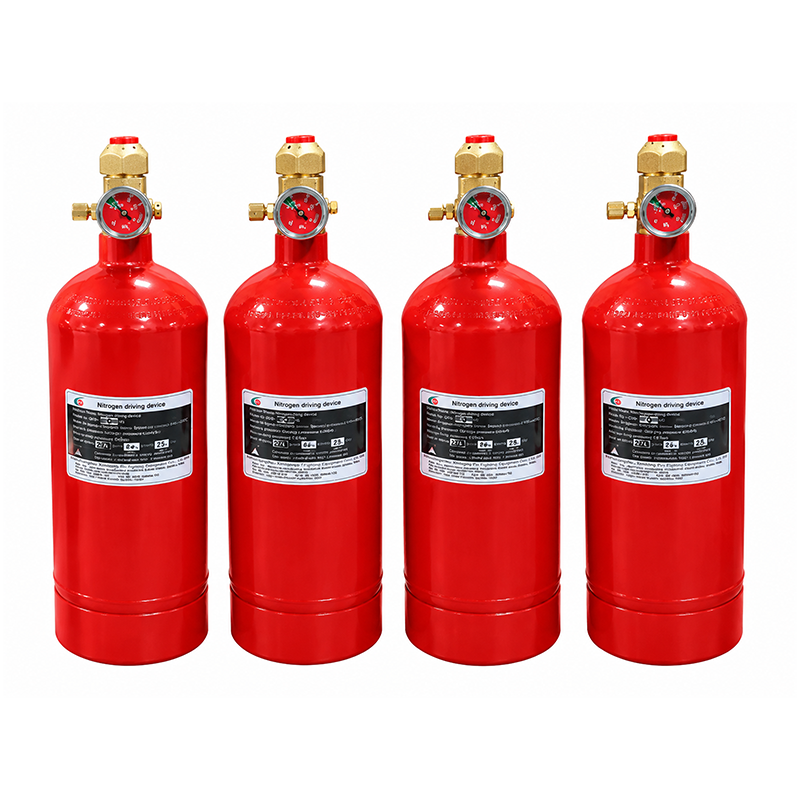
The high pressure CO2 pipe network fire suppression system is a fixed total flooding gas extinguishing installation engineered specifically for electrical substations and power facilities. The system comprises CO2 cylinder banks, container valves, driving devices, piping network, selector valves, discharge nozzles, and electrical control components. It delivers high-pressure carbon dioxide precisely to each protected zone through the pipe network. Leaving no residue, being non-conductive, and causing no corrosion, it is the ideal fire protection solution for transformer bays, switchgear rooms, relay rooms, and control rooms in substations.
Why Substations Need CO2 Pipe Network Suppression
Substations contain densely arranged transformers, switchgear, cable trays, and control equipment. Once an electrical fire starts, it spreads rapidly, and water-based systems may cause short-circuit escalation and equipment damage. CO2 is non-conductive and safe for energized equipment. It vaporizes completely after discharge, leaving no residue and causing no secondary damage to precision electrical equipment. The pipe network design ensures uniform agent distribution across the entire protected zone, eliminating dead corners and controlling fire at its earliest stage.
Core Advantages
1. High Pressure Storage, Rapid Discharge
The system uses 70L high-pressure cylinders with 5.7MPa working pressure and 12.4MPa maximum working pressure, each holding 42kg of CO2. Discharge completes within 60 seconds, quickly reducing oxygen concentration and absorbing heat to extinguish fire at its earliest stage.
2. Combined Distribution for Multiple Zones
Available as unit systems or combined distribution systems. The combined configuration uses selector valves to direct agent from a shared cylinder bank to multiple zones, discharging only into the affected zone. This significantly reduces equipment investment for substations requiring multi-zone protection.
3. Three Activation Modes for Reliability
Supports automatic, manual, and mechanical emergency activation. Automatic mode triggers via detectors and control panel logic. Manual mode operates through remote release stations. Mechanical emergency allows direct valve opening during power failure. Triple redundancy ensures reliable performance under any condition.
4. Intelligent Monitoring, Easy Maintenance
Equipped with pressure switches, leakage monitoring, and remote monitoring interfaces for real-time cylinder pressure and system status. Any abnormality triggers immediate alerts, enabling quick troubleshooting and keeping the system always ready for duty.
5. Zero Residue, Asset Protection
CO2 vaporizes completely after discharge, leaving no residue or liquid. No secondary damage to transformers, switchgear, servers, or archives. Operations resume without cleanup, reducing downtime and economic loss.
Technical Parameters
Applications
-
Transformer and Switchgear Rooms: Protects transformers, HV switchgear, and busbar equipment, preventing electrical fire escalation.
-
Relay and Control Rooms: Protects protection relays, control panels, and automation equipment, ensuring grid dispatch continuity.
-
Cable Trenches and Trays: Pipe network covers dense cable areas for rapid cable fire suppression.
-
Distribution and UPS Rooms: Protects distribution equipment and uninterruptible power supplies for auxiliary systems.
-
Energy Storage and Renewable Stations: Suitable for battery cabins, inverter rooms, and new power facilities.
Operate Guide
The system remains in automatic standby during normal operation. Upon fire detection, signals transmit to the control panel, which confirms the alarm, activates audible and visual warnings, and starts a time delay (typically 30 seconds) for personnel evacuation. After the delay, the driving device opens container valves, releasing CO2 through the piping network and nozzles. For manual operation, press the release station button or open the container valve directly. Routine maintenance includes weekly pressure gauge checks (green zone), quarterly component inspections, and annual weighing to confirm agent quantity remains above 90%. All operations should be performed by trained personnel.
FAQ
Q1: Is the CO2 pipe network system suitable for manned substations?
A: High CO2 concentrations create oxygen-deficient atmospheres. It is recommended only for unoccupied areas or spaces where personnel can evacuate quickly. Warning signs and pre-discharge alarms are essential.
Q2: What components require replacement after discharge?
A: Recharge carbon dioxide agent, inspect container valves, pressure switches, and nozzles. Replenish driving gas if consumed. A full professional inspection is recommended before restoring standby status.
Q3: Can one system protect multiple hazard zones?
A: Yes. Combined distribution systems use selector valves to direct agent from a shared cylinder bank to multiple zones, discharging only into the zone where fire is detected.
Q4: What is the maintenance frequency?
A: Weekly pressure gauge checks, quarterly component inspections, and annual agent weighing. Cylinders require hydrostatic testing at intervals specified by local regulations.
Q5: Is a dedicated cylinder room required?
A: A dedicated room is recommended, maintained at 0~50°C, away from direct sunlight, with adequate space for operation and maintenance. If site conditions are limited, cylinders may be mounted securely outside the protected area.


 Your message must be between 20-3,000 characters!